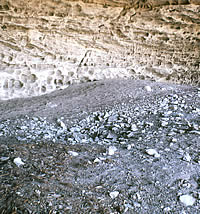
Area F
A small looter’s hole at the north end of the shelter exposed a thick fiber zone underlain by an ash lens. A small unit (F1) measuring 1.0-x-0.5 m was excavated on the south side of the hole leading to the excavation of a 1-x-1 m unit (F2) to the south of F1. This was followed by a final 1-x-1 m unit (F3) between F2 and the shelter rear wall. The Area F deposits were relatively shallow (maximum thickness .8 m) and consisted mainly of trash refuse including cut leaf bases and quids of sotol and lechuguilla, fragmented burned rock, snail and mussel shells, charcoal, and animal bone.
These remains appear to represent discarded debris from cooking, especially plant baking, which may have been carried out in the “sotol pit” that artifact collectors had exposed on the surface of the shelter deposits about 4 meters south of Area F. The term is commonly used to designate the central cooking or roasting pit of an earth oven facility used to bake the “hearts”or “heads” (leaf bases) of sotol as well as Agave lechuguilla. This feature was not excavated, but it seems clear that one or several earth ovens facilities existed in Late Archaic times at the north end of the shelter. Cut leaf bases are similar to trimmed artichoke leaves and represent the outer leaves discarded after baking sotol and lechuguilla hearts (bases). Quids are discarded, chewed-up inner leaves stripped of the sugary “meat” of these desert plants.