 University of Texas at Austin
 College of Liberal Arts
Death on Board La Belle: Clues from the Bones!
Download lesson plan and included materials
Subject: Social Studies and Science
Grade: 4th
Author: Carol Schlenk and Laine Liebick (2008), revised by Jason Terry and Mary Rodriguez (2023)
Time Duration: One or two 45-minute class periods
Objective: This lesson introduces students to the different types of scientific inquiries used to analyze human skeletons and learn about life in the past. Students will complete an illustrated online interactive activity based on the actual analysis of the skeleton found on La Salle’s shipwreck, La Belle, to determine what the French sailor’s life was like.
TEKS: Science, Grade 4
- (1A), ask questions and define problems based on observations or information from text, phenomena, models, or investigations
- (1D), use tools, including hand lenses; metric rulers; Celsius thermometers; calculators; laser pointers; mirrors; digital scales; balances; graduated cylinders; beakers; hot plates; meter sticks; magnets; notebooks; timing devices; sieves; materials for building circuits; materials to support observation of habitats of organisms such as terrariums, aquariums, and collecting nets; and materials to support digital data collection such as computers, tablets, and cameras, to observe, measure, test, and analyze information
- (1E), collect observations and measurements as evidence
- (3A), develop explanations and propose solutions supported by data and models
Social Studies, Grade 4
- (2B), identify the accomplishments and explain the impact of significant explorers, including Cabeza de Vaca; Francisco Coronado; and René Robert Cavelier, Sieur de la Salle, on the settlement of Texas
- (19A), differentiate between, locate, and use valid primary and secondary sources such as technology; interviews; biographies; oral, print, and visual material; documents; and artifacts to acquire information about Texas
- (19B), analyze information by applying absolute and relative chronology through sequencing, categorizing, identifying cause-and-effect relationships, comparing, contrasting, finding the main idea, summarizing, making generalizations and predictions, and drawing inferences and conclusions
- (19C), organize and interpret information in outlines, reports, databases, and visuals, including graphs, charts, timelines, and maps
Materials:
- Skeletal Report Form: Student Handout
- Skeletal Report Form: Teacher Guide and Answer Key
- Skeleton Chart: Student Handout
- Skeleton Chart: Teacher Guide
- TBH Clues from the Bones kids’ activity: www.texasbeyondhistory.net/belle/images/clues-from-the-bones.html
Activities and Procedures:
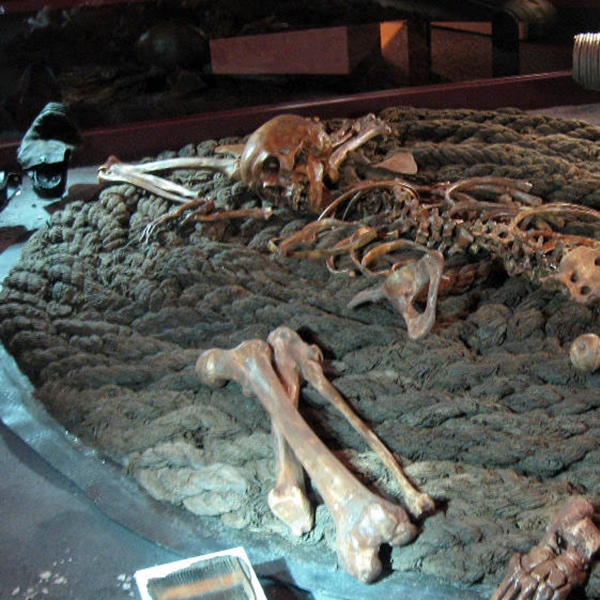
Step 1: Introduce the La Belle shipwreck as one of La Salle's ships that was wrecked off the coast of Texas in 1686. The French explorer La Salle had been trying to locate the mouth of the Mississippi in order to establish a French colony there. His ship hit a sandbar during a storm, and later sank in Matagorda Bay midway between present-day Galveston and Corpus Christi, Texas. At least one sailor went down with the ship. About 300 years later, archeologists excavated the shipwreck, including the skeleton of the sailor. Explain that by using different types of scientific inquiry to analyze skeletons and other evidence, a great deal can be learned about life in the past, including a person’s age, physical appearance, and health. Students will do an online activity based on the analysis of the skeleton to determine what this sailor’s life was like.
Step 2: Distribute a copy of the ‘Skeletal Report Form’ and the ‘Skeleton Chart’ student handouts to each student. Have students go through the Internet activity: "Death on Board La Belle! Finding Clues from the Bones" at www.texasbeyondhistory.net/belle/images/clues-from-the-bones.html
Step 3: Students will fill out the forms based on what they learned in the activity.
Step 4: Have students discuss their findings with the class, and share their answers to the "thought" questions on the student handout. The Skeleton Chart-Teacher’s Guide (included) from the activity may be used as an overhead projector prompt.
Student Product: Completed Skeletal Report Form and Skeleton Chart student handouts.
Extension Activities: Have students view the Texas Beyond History web pages on La Belle:www.texasbeyondhistory.net/belle/index.html and www.texasbeyondhistory.net/stlouis/index.html to learn more about La Salle, the shipwreck, and his temporary colony at Fort St. Louis near Victoria, Texas.
Assessment: Students will correctly complete the answers to the handout questions and discuss their findings with class.